Daniel Page is the Director of Business Development at ASEOHosting and a longtime contributor to the company blog. Writes about SEO strategy, IP-diverse hosting, and staying visible in an AI-driven search landscape—bridging the gap between infrastructure and optimization.
When people hear about SEO hosting, a common query is “Why should I use SEO hosting; surely I can optimize my site for search with any hosting company.”
That’s completely right, but SEO hosting has a specific place in the SEO strategist’s tool box.
In this article, we’d like to clear up some of the confusion around SEO hosting and help you develop an understanding of what it is and why you might need it.
Guest posting and corporate blogging have become an essential part of SEO and inbound marketing. If you’ve not written blog posts regularly, it can seem like a straightforward exercise, but when you’re looking at a blank page and a pile of notes,
it’s not quite so simple to pull it together into a effective SEO package that is maximally sharable and readable for the intended audience.
We will look at actionable tips. These tips and techniques will help structure a blog post. This will help marketers and SEOs create great content. We’ll learn from journalists. They excel at conveying information clearly and briefly. However, we will adapt their advice. This will make it more useful for SEOs and marketers in general.
We’re going to assume that you’re on top of the research, have your market personas in order, and know what you want to say, but just need a little help organizing and structuring it on the page.
Web hosting can range in cost from free to pennies a month to hundreds or even thousands of dollars. If you’re contemplating setting up a website, you may wonder exactly what you get for your money.
The services that web hosting companies offer vary, but all of them share a basic set of costs that enable them to get your site up and running on the net. We’re going to have a look at those costs and think about how free web hosting and very cheap web hosting companies pay for them.
The Costs
Infrastructure
For a company to offer web hosting, they need servers. Servers are usually high-power computers that are capable of processing lots of data and delivering it to web clients. Your average home computer can do much the same thing at a less efficient level, but hosting companies need specialist hardware that has lots of RAM, disk space, and processing power.
June brought the warm weather and also warmed up the old SEO vs. content marketing debate. Throw social media into the mix and you have a real quagmire. In that spirit, we’ve gathered up the best SEO, content marketing, and social media articles from June. After you’ve taken a moment to peruse our selections, let us know where you stand on the debate in the comment section below.
SEO
Keyword Research is now a Dirty Trick?
Since the announcement of a new Penguin Update 2.0 some people are running scare and others are shouting, “Keywords?! I don’t even know what keywords are. I just write for my audience!” What makes you think using keywords is some sort of dirty trick? Google wants you to use keywords to guide them in cataloging your content. How else would they know where to put your stuff? (more…)
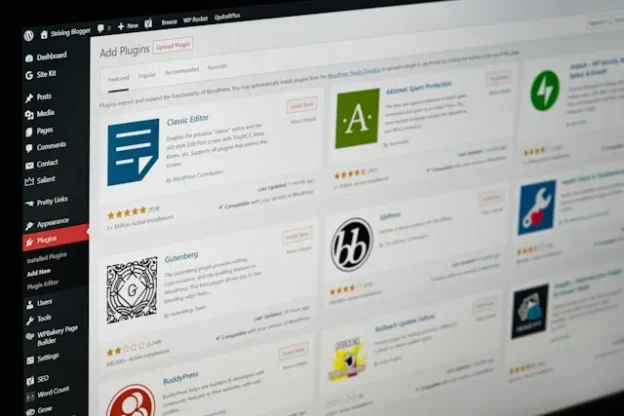
People who frequently install and configure WordPress often develop a standard set of plugins. They install these plugins on every new site. They become very familiar with the quirks and functions of their default set.
This familiarity is like knowing the back of their hands. It’s a helpful habit for increasing productivity.
I’m always happy to try out something new, but if you have a core selection of plugins, it’s easy to keep track of security issues and monitor the progress of development. It also allows me to construct a well-worn workflow so that WordPress installations can be completed quickly and efficiently.
A little over a year after its introduction, the Penguin algorithm was given a major update. As many have discovered, Penguin has had sweeping effects on the way Google deals with sites it considers to be trying to game the system with over-optimization.
Since Penguin first hit the servers, there have been two significant updates. However, both were largely tweaks or minor data refreshes. Penguin 4 introduces a major update to the core algorithm and delves much deeper into sites to detect spammy tactics.
If version numbers confuse you, remember this: Google revised the Penguin spam program three times. They labeled this update Penguin 4. However, they call it Penguin 2.0 because it’s the first major algorithm revision.
The flowers arrived as expected in May, but so did a new Penguin update from Google. Now, more than ever, it’s important to make sure your SEO is being done the right way. In that spirit, we’ve gathered up the best SEO, content marketing, and social media articles from May. Take a moment to check out this informative and interesting content for some great suggestions.
SEO
Steady your SEO Ship with the Correct Anchor Distribution
By the time the Panda and Penguin updates from Google had been rolled out the internet changed almost instantly, and although my niche sites suffered dramatically as a result (as did my income) the simple fact is that these changes were for the better.
Marketing moves fast. The SEO strategies that win today – creating high-quality content, focusing on the metrics that matter to clients and investing in digital PR – are often far different than what’s come before them. Next-level marketers and SEOs know what it takes to be successful today, but convincing the powers that be within a business or organization can be challenging. (more…)
Traditionally, businesses have been broken into units, each of which has a particular area of expertise and responsibility. Public relations handled interactions with the media, marketing was responsible for getting the word out, and SEO for bringing in traffic by any means. Then there’s customer service, sales, administration, manufacturing, and so on. Each a little dukedom with feudal responsibility to its C-Level royal court.
SEO is changing;
SEO’s role is changing. Indeed, it’s expanding beyond its old core functions. These traditionally involved bringing in traffic through technical site optimization and link building. Now, people more accurately refer to this broader approach as inbound marketing. Furthermore, in today’s world, a strong web presence is absolutely key for any company’s income. Furthermore, Google strictly targets disapproved tactics. Therefore, content has become the most important element. (more…)
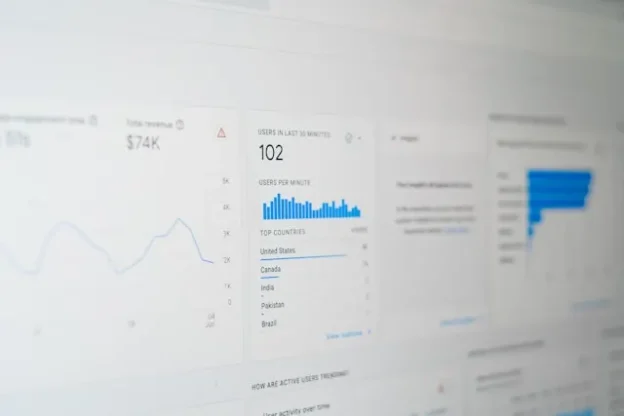
Capturing real-time analytics is all the rage at the moment. Knowing exactly what’s going on at every moment is deemed an important part of site management.If you often spend hours staring at Google Analytics, watching your site visitor numbers rise and fall, you may be overstressing yourself. Too much information can be just as harmful as too little. However, there’s good news. Google has recently released a raft of improvements to its real-time features.
The productivity killing aspects of real-time data aside, it can, on occasion, be very useful to track exactly what’s happening on a site at a particular moment, rather than relying on aggregate data where useful information often falls between the cracks of statistical agglomeration. (more…)
As an industry, SEOs have absorbed the message that ‘short is sweet’. We know that the attention span of surfers is limited. They don’t tend to luxuriate in the written word, enjoying writing for writing’s sake.
When done badly, it results in poor content. This content is either too thin to be worth reading. Or, it appears to target an audience who has just finished reading a very simple children’s book.
Blogger lore suggests writing content simply. However, several reasons exist to add longer-form content for educated adults. SEO and content marketing both provide these reasons. In fact, including this type of content can noticeably benefit corporate blogs and websites.