Author: Daniel Page

  • Negative SEO: The Hidden Threat to Your Rankings!

    Negative SEO: The Hidden Threat to Your Rankings!

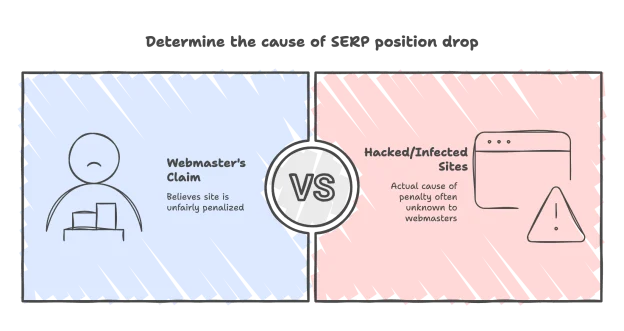
    In a recent blog entry, Matt Cutts discusses a common response of sites that have been delisted or had their SERP position drop. Webmasters say that there’s nothing wrong with their site, that they haven’t been engaged in any shady link-building strategies, and Google is unfairly punishing them. Cutts responds that in many of these cases the reason for the penalty is that sites have been hacked and infected with malicious software without webmaster being aware.

    Hacking a site is one of a number of Negative SEO strategies that a site’s competitors can engage in to damage search rankings and reputations. Today we’ll be having a look at hacking and a couple of other Negative SEO tactics, so that you can be aware of possible vectors of attack for your sites, and what you can do about them.


    (more…)

  • Small Players, Big Impact: Why SEOs Should Pay Attention.

    Small Players, Big Impact: Why SEOs Should Pay Attention.

    As we noted in our previous article, personalization in the major search engines is changing the SERP landscape. Indeed, each individual gets a search landscape. This landscape is shaped uniquely. It is shaped to meet their needs. Google spends a lot of money on research and development. This is to bring relevant search results to its users. They have more or less bet the farm on socially directed, personalized search results. Some people find this to be a wonderful advance, and Google’s recent iteration for search on mobile — Google Now — is  the logical extension of this approach, and has found favor in many corners.

    (more…)
  • Less Traffic, Better Engagement: The Surprising Truth!

    Less Traffic, Better Engagement: The Surprising Truth!

    Many sites around the web have taken a hit with their traffic numbers because of Google’s recent Panda and Penguin updates, and it would be hard to argue that this is in any way positive. But, if we put these causes for traffic loss aside, there is another factor that is of concern to SEOs and webmasters.

    Even if algorithm changes haven’t caused traffic drops, things have changed. Google’s recent push to personalize search results has made something almost impossible. It’s now very hard to predict what a specific user’s SERP will look like with any certainty.

    All the SEO in the world won’t help drive traffic. This is true if Google decides something. They might use a user’s browsing, search, and social media data. Based on this, they might think a user wants something unrelated to your site. This could happen even if the user enters seemingly relevant search terms.

    (more…)
  • Are Social Signals the New Links? In Short: No.

    Are Social Signals the New Links? In Short: No.

    Ever since Eric Schmidt confirmed at LeWeb last year that social signals were being taken into consideration for SERPs, the SEO world has been rife with speculation and conjecture about the relative merits of social signals as compared to links. Some of the more excitable members of the industry even went so far as to declare the death of link-building as an SEO tool.

    In a recent interview,

    Google’s chief spam slayer, Matt Cutts, has attempted to dampen down the more extreme prognostications about the ascendency of social signals. Yes, social signals are being used to some extent, but the humble link still leads the way when it comes to determining SERP rankings, and it will for some years to come.

    (more…)
  • Four Ways to Ensure Your Site Gets Crawled Frequently

    Four Ways to Ensure Your Site Gets Crawled Frequently


    There’s nothing more frustrating for a webmaster than having to wait to be crawled. After you perfect your on-site SEO, create great content, and ensure a spider-friendly link structure, you can only wait. You wait for the search engine crawlers to visit.

    Google will crawl your site at a frequency it determines, and while you can use Google Webmaster Tools to set a crawl rate, that will just limit crawls to a rate below the one you specify to prevent your server from getting hammered. It won’t encourage Googlebot to pay a visit any more frequently if its algorithms decide that there is no need. There are, however, methods you can use to speed up the bots crawl rate, and today we’ll  have a look at 4 of them.

    (more…)
  • Three Top Tips for Building A Natural Backlink Profile

    Three Top Tips for Building A Natural Backlink Profile

    As we all know, back-links are a critical factor of search engine ranking algorithms. Getting more incoming links from better sources is a sure-fire method for improving a site’s position in SERPs. Google’s Penguin algorithm update now penalizes unnatural link-building techniques.

    Google prioritizes rankings that serve users’ needs—and since shady link-building tactics undermine this goal, the algorithm actively demotes such sites. To help you stay compliant, here are three safe backlink strategies that won’t trigger Google’s spam filters.

    (more…)

  • Five Best Practices to Avoid A LinkedIn-Style Password Embarrassment

    Five Best Practices to Avoid A LinkedIn-Style Password Embarrassment

    There’s nothing more embarrassing for a web-based company than allowing their user’s personal data to be revealed on the open Internet.

    Websites and services have an ethical duty to protect the private data entrusted to them, and yet, time and again, we hear of hugely popular web services like LinkedIn and Last.fm engaged in password practices that are very definitely not the best.

    On top of the ethical duty, significant costs associate with lax security, including danger to business continuity, loss of reputation, and legal consequences for failure to adhere to data protection regulations.

    (more…)
  • Top Five Reasons Your Website’s Visitors NOT Bounce!

    Top Five Reasons Your Website’s Visitors NOT Bounce!

    recently confirmed Google doesn’t use bounce rate as a signal for search engine ranking; this offers little comfort to website owners whose visitors won’t stick around.

    A site’s bounce rate is, specifically, the percentage of visitors that leave the site from the page on which they arrived without interacting or following navigation. Sites with a high bounce rate are falling at the first hurdle, and it can often be difficult to determine exactly which factors are repelling users. Today we’re going to have a look at the five most likely reasons that your site is failing to engage people.

    (more…)
  • How Rich Snippets Can Increase Your Click-Through Rate!

    How Rich Snippets Can Increase Your Click-Through Rate!

    Historically, the meaning of web content has been largely unfathomable to search engines, which indexed fairly clumsy indicators of content like keywords to get a sense of what a web page is about.

    Semantic markup, however, allows search engines to have some understanding of what certain parts of a page’s content refers to and include that information in the text that they display below the links on SERPS (known as snippets).

    Semantic markup helps Google understand page details. For example, it can identify price and customer reviews. Consequently, Google can display this information in search results. This is visible in the image.

    (more…)
  • 10 Proven Tips to Boost Your Website’s Speed.

    10 Proven Tips to Boost Your Website’s Speed.

    Embeds like analytics scripts, tracking scripts, and social media widgets are not always designed and written as well as one might hope; consequently, including too many of them in a web page can incur large slowdowns in loading time. Indeed, this Ghostery study shows such slowdowns.

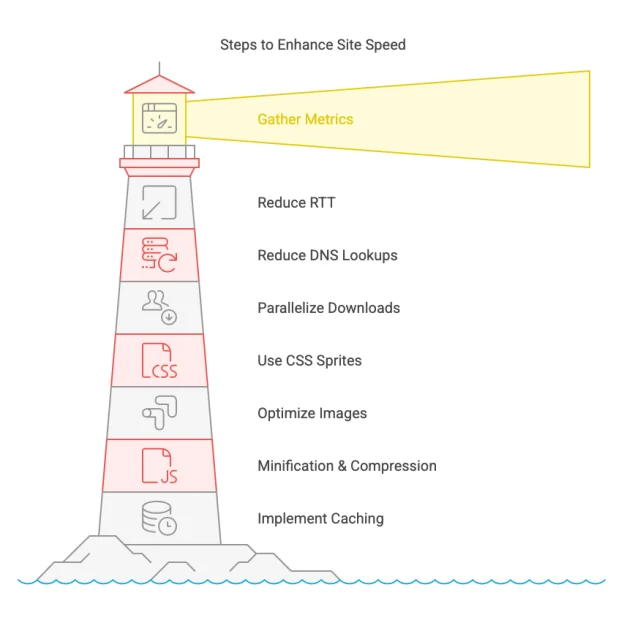
    Top Ten Ways To Improve Site Speed

    As we saw in Part One of our series on website optimization, a slow site can seriously impact user experience. Anything over 3 seconds is going to be an irritation to users, and irritated users lead to lost sales, reduced conversions, and higher bounce rates. For instance, figures released by Walmart show that increased load times are significantly correlated with lowered conversion rates. Specifically, a precipitous drop occurs as load times increase between one and three seconds. (more…)